
Planned Roof Repairs vs. Emergency Replacement: The Cost of Waiting
For commercial property owners, the difference between a planned roof repair and an emergency replacement is not just the scope of work. It is the difference between controlling an investment and responding to a crisis. Addressing a localized issue early may preserve a serviceable roof; waiting can mean expanded damage, urgent scheduling, and unplanned capital spending.
Planned Repairs vs. Emergency Replacement: At a Glance
| Factor | Planned Repair | Emergency Replacement |
|---|---|---|
| Scope | Targeted repairs where feasible | Potentially extensive replacement |
| Scheduling | Planned labor and materials | Possible expedited work and procurement |
| Budget | More predictable spending | Unplanned capital expense |
| Operations | Coordinated around occupants | Greater disruption risk |
| Options | Time to evaluate alternatives | Limited decision-making time |
| Warranty | Repairs coordinated with manufacturer requirements | Delayed reporting or unauthorized repairs may affect coverage |
| Restoration / Recover | Often still possible while the assembly is dry | Typically ruled out once insulation is saturated |
THE TAKEAWAY Proactive assessment creates options. An emergency can take them away.


Why Waiting Can Cost More
The cost of waiting goes beyond the initial roofing work. As moisture spreads and conditions deteriorate, owners may lose less disruptive options and face additional requirements.
Fewer options. Coating restoration and roof recovers generally depend on a mostly dry roof assembly. Once insulation is saturated, those lower-cost paths may no longer be available, and a full tear-off becomes more likely.
Code-driven upgrades. A full replacement can trigger current Massachusetts energy code insulation requirements, adding costs that a targeted repair typically would not.
Warranty risk. On roofs still under manufacturer warranty, late reporting or repairs by unauthorized contractors may put coverage at risk.
Insurance documentation. Many property insurance policies distinguish between sudden damage and long-term deterioration. A documented inspection and maintenance history can help owners substantiate conditions and claims.
Why Timing Matters in New England
New England winters add another layer of risk. Many roofing adhesives, coatings, and membrane welding processes have temperature limits, so a leak discovered in January may require a temporary repair until conditions allow permanent work. Meanwhile, freeze-thaw cycles can worsen damage from water already inside the roof assembly. Addressing known issues in spring, summer, or fall gives owners more options and more predictable scheduling.


When Is Repair the Smarter Investment?
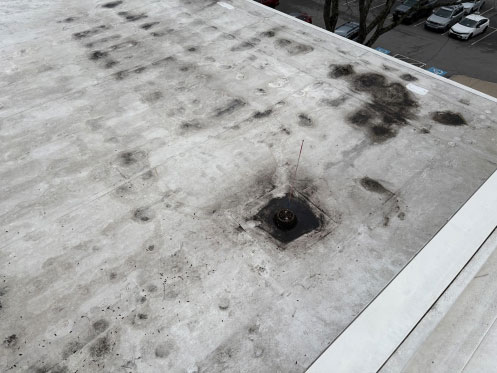
Targeted commercial roof repairs can make financial sense when damage is localized and the surrounding roof assembly remains serviceable. Where the membrane is aging but the assembly beneath it is largely dry, a fluid-applied coating restoration or code-compliant recover may extend service life at lower cost and with less disruption than a full tear-off. These options depend on accurate moisture data, which makes early assessment especially valuable.
But repair is not always the economical choice. Widespread moisture saturation, recurring failures, deteriorated substrates, or an aging system with limited remaining life may justify a planned replacement. The goal is not to postpone replacement indefinitely; it is to choose the right scope at the right time.
Warning Signs Worth a Closer Look
Consider scheduling a roof assessment if you notice:
- Ponding water — Water remaining on the roof more than 48 hours after rainfall.
- Open seams or blisters — Separated laps, bubbles, or wrinkles in the membrane.
- Flashing deterioration — Loose, cracked, or pulled-away flashing at walls, curbs, and penetrations.
- Interior signs — Ceiling stains, damp insulation, or musty odors on upper floors.
- Recurring leaks — Repeat leaks in the same area that may signal a larger underlying issue.
- Post-storm damage — Debris, displaced materials, or damaged edge metal after high winds or heavy snow.
Better Roof Data Leads to Better Capital Decisions
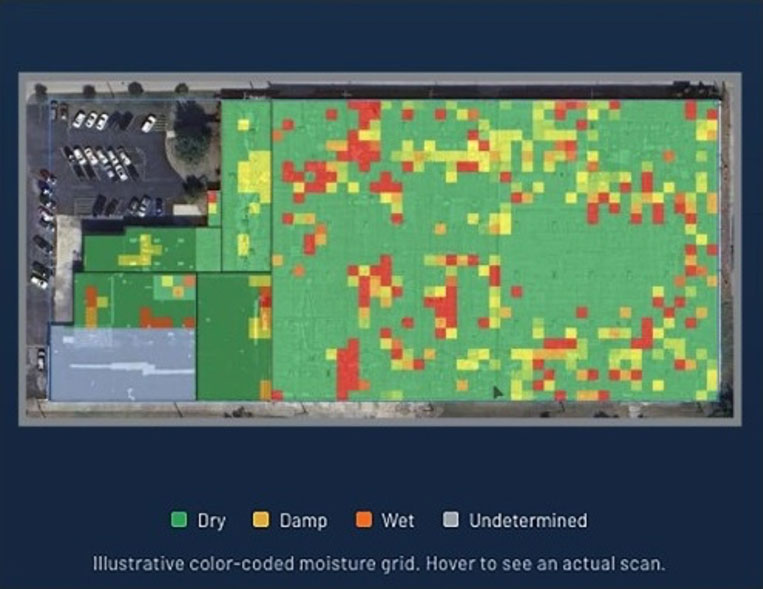
A sound repair-versus-replacement decision starts with a roof assessment that considers membrane condition, drainage, leak history, roof age, warranty requirements, and evidence of moisture beneath the surface. Visual inspection alone may not reveal the extent of concealed moisture.
PIERCE’s MoistureMap technology, available exclusively through PIERCE in New England, uses non-destructive scanning to help identify potential wet, damp, and dry areas across a roof. Findings are evaluated alongside field observations and appropriate verification testing to help guide targeted repairs, restoration, or replacement planning.

Make the Decision Before It Becomes an Emergency
A practical baseline is a professional roof inspection twice a year, typically in spring and fall, plus a check after major storms. Through PIERCE Protect, our recurring building envelope program, owners can keep roof, façade, and garage inspections on a regular schedule so issues are documented and addressed before they become emergencies.
Plan Ahead With PIERCE
Don’t wait for an emergency to determine your next roofing investment. Connect with Nate Pritchard, VP of Roofing at PIERCE, to review your roof’s condition, discuss repair and replacement options, and build a practical plan around your property and budget.